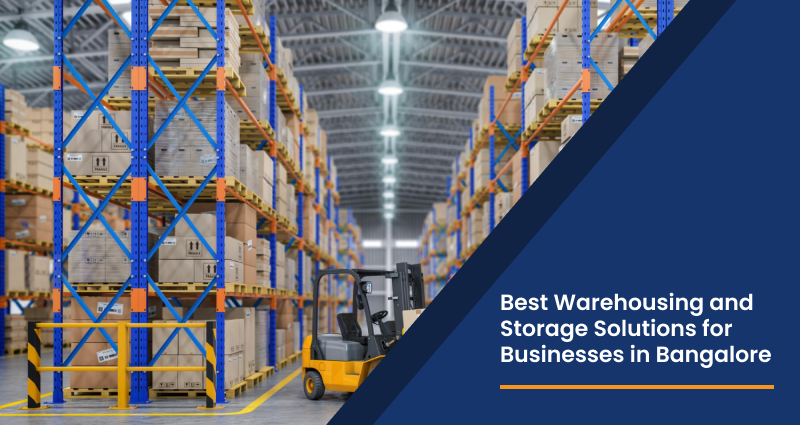
Bangalore has developed into one of India’s major technology, manufacturing, e-commerce and commercial hubs. As businesses expand across the city and beyond, the need for reliable inventory management and secure storage continues to grow. From e-commerce sellers and retailers to manufacturers, distributors and growing start-ups, businesses often require additional space to store products, raw materials, equipment and other valuable items.
Finding the right warehousing in Bangalore can help businesses organise inventory, improve operational efficiency and manage growing stock without investing heavily in their own storage infrastructure.
However, choosing a warehouse is about more than simply finding an empty space. Location, security, accessibility, storage conditions, scalability, handling services and overall cost should all be considered before making a decision.
This guide explores the different Warehousing Services, their benefits and the factors businesses should consider when selecting a suitable Storage Facility in Bangalore.
What Is Warehousing and Why Do Businesses Need It?
Warehousing refers to the organised storage of goods, inventory, equipment or materials in a dedicated facility until they are required for manufacturing, distribution, sale or delivery.
For businesses, a warehouse can act as an important link between suppliers, operations and customers. Instead of keeping large quantities of stock in an office, shop or manufacturing unit, businesses can use dedicated storage space to keep inventory organised and accessible.
Modern warehousing can include more than basic storage. Depending on the provider and business requirements, services may include:
- Inventory storage
- Loading and unloading
- Packing and labelling
- Inventory management
- Order fulfilment
- Pickup and delivery
- Security monitoring
- Short-term and long-term storage
- Specialised storage for selected products
The right solution depends on the type and quantity of goods being stored and how frequently the business needs access to its inventory.
What Are the Different Types of Warehousing Services?
Businesses in Bangalore can choose from different warehousing models depending on their operational requirements.
1. Private Warehouses
A private warehouse is owned or leased by a business for its own inventory. This option can provide greater control over operations but may involve significant costs for rent, maintenance, staffing and infrastructure.
It can be suitable for larger businesses with predictable and substantial storage requirements.
2. Public Warehouses
Public warehouses provide storage space to multiple businesses. Instead of investing in an entire warehouse, companies can use the space they need and pay according to the agreed arrangement.
This can be useful for small and medium-sized businesses that need professional storage without managing their own facility.
3. Shared Warehousing
Shared warehousing allows several businesses to use a common storage facility. It can provide flexibility when inventory levels fluctuate throughout the year.
For growing businesses, this model can help avoid paying for unused warehouse capacity.
4. Cold Storage
Cold storage facilities are designed for products that require controlled temperatures. Food products, pharmaceuticals and certain other temperature-sensitive goods may require specialised storage conditions.
Businesses should confirm that the facility has the appropriate equipment and monitoring systems before storing temperature-sensitive products.
5. On-Demand Storage
On-demand storage is useful for businesses that need additional space temporarily. For example, an e-commerce company may need extra storage during a seasonal sales period.
This model can provide greater flexibility compared with committing to a long-term warehouse lease.
What Are the Benefits of Using a Storage Facility in Bangalore?
A professionally managed storage facility in Bangalore can provide several advantages for businesses.
1. Better Inventory Organisation
Keeping products in a dedicated facility makes it easier to organise stock and separate different categories of goods. A well-structured warehouse can also simplify loading, unloading and inventory movement.
2. Reduced Infrastructure Costs
Setting up a private warehouse involves expenses such as rent, security, utilities, equipment, maintenance and manpower. Outsourced storage can reduce the need for businesses to manage all these requirements independently.
3. Flexible Storage Capacity
Business inventory can change significantly during the year. Flexible warehousing allows companies to increase or reduce storage space according to demand.
4. Improved Security
Professional facilities may include CCTV surveillance, access control, fire safety measures and trained personnel. These features can provide additional protection compared with storing valuable stock in an ordinary commercial space.
5. Convenient Transportation
A strategically located warehouse can make it easier to move inventory between suppliers, warehouses, businesses and customers.
6. Business Scalability
As a company grows, its storage requirements may also increase. Choosing a scalable warehouse solution can make expansion easier without requiring an immediate investment in a larger private facility.
Which Businesses Need Warehousing in Bangalore?
Warehousing is not limited to large corporations. Businesses of different sizes and industries can benefit from professional storage.
1. E-commerce Businesses
Online sellers often need to store products before they are dispatched to customers. During festive seasons and promotional campaigns, inventory levels can increase substantially, creating additional storage requirements.
2. Retail Businesses
Retailers can use warehouses to store excess stock instead of occupying valuable space in their shops.
3. Manufacturers
Manufacturing companies may need dedicated space for raw materials, components, packaging materials and finished products.
4. FMCG Businesses
Fast-moving consumer goods companies often require organised storage and efficient distribution because products move through the supply chain quickly.
5. Pharmaceutical Businesses
Pharmaceutical companies may have specialised storage requirements depending on the products being stored, including controlled environmental conditions for certain items.
6. Start-ups and SMEs
Growing companies may not have the budget or inventory volume to justify establishing their own warehouse. Outsourced Warehousing Services can provide a more flexible alternative.
What Should You Consider When Choosing a Warehouse?
Choosing the right warehouse requires careful evaluation. A facility that looks affordable may not necessarily be the best option if it creates transportation or operational difficulties.
1. Location
Location is one of the most important factors when selecting warehousing in Bangalore.
Consider the warehouse’s proximity to:
- Customers
- Suppliers
- Main roads and highways
- Distribution centres
- Business operations
- Transport hubs
A strategically located warehouse can help reduce transportation time and improve delivery efficiency.
2. Accessibility
Check whether the facility can accommodate the type of vehicles used for your business. Loading bays, parking space and suitable entry and exit points can make warehouse operations more efficient.
3. Security
Ask about CCTV surveillance, access control, security personnel, fire protection and other safety measures.
4. Storage Conditions
The warehouse should be appropriate for the products being stored. Businesses handling fragile, sensitive or temperature-controlled goods should confirm the specific storage conditions available.
5. Inventory Management
If your business handles a large volume of stock, inventory tracking can be extremely useful. Ask whether the provider offers digital inventory management, barcode tracking or reporting systems.
6. Scalability
Your storage requirements may change as your business grows. Look for a provider that can accommodate additional inventory or offer flexible storage arrangements.
7. Pricing and Additional Charges
Do not compare warehouses based only on monthly rent. Consider loading, unloading, handling, packing, transportation, maintenance and other potential charges when calculating the total cost.
Where Are the Major Warehousing Locations in Bangalore?
Bangalore’s warehousing demand is spread across several industrial and commercial corridors. Areas such as Peenya, Whitefield and Electronic City are among locations associated with industrial, logistics and commercial activity.
The best location depends on your business rather than simply choosing the area with the lowest rental price.
For example, a company serving customers in the southern part of Bangalore may benefit from a warehouse closer to Electronic City, while a business operating around the eastern IT corridor may prioritise locations closer to Whitefield or surrounding areas.
Accessibility to major roads and the ability to reach customers efficiently should therefore be considered alongside warehouse costs.
How Much Do Warehousing and Storage Services Cost?
There is no single price for warehousing because the cost depends on several factors.
Some of the main considerations include:
- Amount of space required
- Type of goods
- Storage duration
- Warehouse location
- Security requirements
- Handling and loading requirements
- Inventory management services
- Packing requirements
- Pickup and delivery
- Temperature or environmental controls
- Contract duration
A small business requiring temporary storage may prefer a flexible arrangement, while a large manufacturer with predictable inventory may benefit from a longer-term warehouse agreement.
When comparing providers, ask for a detailed quotation that clearly explains what is included in the price.
How Can Businesses Make the Most of Warehouse Storage?
Simply renting warehouse space does not automatically improve business operations. Businesses should also develop an efficient storage strategy.
1. Organise Inventory by Category
Separate products based on type, demand, size or other relevant characteristics. Clear labelling can make stock identification easier.
2. Track Inventory Regularly
Maintain accurate records of goods entering and leaving the warehouse. Digital inventory management can help businesses monitor stock levels and reduce errors.
3. Prioritise Frequently Moving Products
Products that are ordered regularly should be positioned where they can be accessed easily. This can reduce unnecessary movement within the warehouse.
4. Review Storage Requirements
As your business changes, regularly review whether your current storage arrangement still meets your requirements.
5. Plan Seasonal Demand
If your business experiences seasonal peaks, arrange additional warehouse capacity in advance rather than waiting until inventory levels become difficult to manage.
When Should You Consider Outsourced Warehousing Services?
Outsourced warehousing can be particularly useful when maintaining a private warehouse becomes expensive or difficult to manage.
Consider outsourced storage if:
- Your inventory is growing rapidly.
- You need temporary additional space.
- Your business has seasonal storage requirements.
- You want to avoid a long-term warehouse lease.
- Your current premises have insufficient storage.
- You want professional handling and inventory support.
- You are expanding into new areas.
- You want to focus your internal resources on core business activities.
For businesses undergoing relocation, renovation or expansion, storage can also provide a temporary solution while operations are being reorganised.
How Can Warehousing Support Business Growth?
The right storage strategy can support business growth by providing the infrastructure needed to handle increasing inventory without forcing a company to immediately invest in its own warehouse.
For example, an expanding e-commerce business may initially require only a small amount of storage. As orders increase, it may need additional inventory capacity, packing support and distribution assistance.
A flexible warehousing arrangement allows the business to scale its storage requirements alongside demand.
Warehousing can also work alongside relocation and logistics services. Businesses moving offices, changing premises or reorganising their operations may temporarily need additional space for furniture, equipment, documents or inventory.
If you are planning a business move, a reliable house shifting service in Bangalore can help with household relocations, while businesses requiring local logistics support can also explore professional moving services.
Similarly, businesses and residents around major IT corridors may search for packers and movers Electronic City or packers and movers in Marathahalli when relocating furniture, equipment or other belongings.
Conclusion
Choosing the right warehousing solution is an important decision for businesses operating in Bangalore. From e-commerce and retail to manufacturing and growing SMEs, reliable storage can help companies organise inventory, manage operational costs and prepare for future growth.
The ideal Storage Service in Bangalore should offer the right combination of location, security, accessibility, storage conditions, flexibility and pricing. Businesses should also consider their future requirements rather than selecting a warehouse based solely on immediate cost.
Whether you need temporary storage during a business transition or a longer-term solution for inventory management, selecting a reliable storage partner can make the process more organised and efficient.
FirstPick Packers and Movers can support businesses and individuals with relocation and moving requirements, helping coordinate the handling, packing and transportation of belongings as part of a wider relocation plan.
Planning a business relocation, inventory move or temporary storage requirement in Bangalore? Get in touch with FirstPick Packers and Movers to discuss your requirements and find a suitable relocation solution for your business. Learn More!