Home gyms have become increasingly popular, with people investing in everything from treadmills and exercise bikes to dumbbells, benches and multi-gym machines. While having Gym Equipment at home makes it easier to maintain a regular fitness routine, moving these items to a new property can be considerably more complicated than moving ordinary household belongings.
Gym equipment is often heavy, bulky and made up of multiple components. Some machines contain motors, screens, cables, belts or other delicate parts that can be damaged if they are handled incorrectly. Even smaller fitness accessories can become scratched, bent or damaged when they are packed together without proper protection.
Whether you are moving to a new house, relocating your home gym or transporting equipment to another city, proper preparation is essential.
This guide explains how to safely prepare, dismantle, pack, transport and set up gym equipment for home, helping you reduce the risk of damage and make your relocation more organised.
Why Does Gym Equipment Need Special Care During a Move?
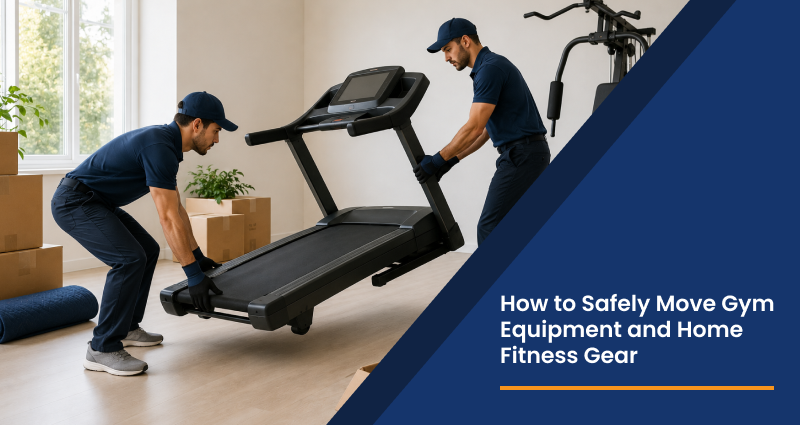
Unlike clothes, books or ordinary household items, gym equipment can be unusually heavy and difficult to handle. A treadmill, for example, may require several people to move safely, while a multi-station gym may need partial dismantling before it can pass through doors or staircases.
Gym equipment can also contain sensitive components.
Depending on the item, these may include:
- Electronic displays
- Motors
- Power cables
- Belts
- Resistance mechanisms
- Hydraulic components
- Moving joints
- Steel frames
- Glass or plastic screens
Improper lifting, dropping or tilting can potentially damage these components.
The equipment can also damage walls, flooring and doors if it is moved without sufficient planning. For this reason, the moving process should begin with an assessment of both the equipment and the route through which it will be transported.
What Gym Equipment Can You Move Yourself?
Not every fitness item requires professional moving assistance. Smaller and lighter equipment can usually be prepared and packed more easily.
Items that may be relatively straightforward to move include:
- Yoga mats
- Resistance bands
- Small dumbbells
- Kettlebells
- Skipping ropes
- Exercise balls
- Foam rollers
- Small workout accessories
However, heavier items such as treadmills, cross trainers, rowing machines, weight benches and multi-gym systems require greater care.
The best workout equipment for home may be convenient for daily exercise, but its size and weight should be considered when planning a future relocation.
If an item is extremely heavy, difficult to dismantle or contains sensitive electrical components, professional assistance is generally a safer option.
How Should You Prepare Gym Equipment Before Moving?
Preparation is one of the most important stages of moving fitness equipment.
Before packing anything, create an inventory of all your equipment. Record the brand, model and condition of larger or expensive items. Taking photographs before dismantling can also help you remember how different components were positioned.
1. Read the Manufacturer’s Instructions
Check the original user manual whenever possible. Some machines have specific instructions for transportation, folding or dismantling.
2. Disconnect Electrical Equipment
For treadmills, exercise bikes and other powered equipment, disconnect the power supply before beginning the preparation process.
Never attempt to dismantle electrical components unless you understand how the equipment is designed.
3. Remove Loose Parts
Remove accessories, water bottles, weights, screens or detachable components that could become loose during transportation.
4. Clean the Equipment
Wipe down equipment before packing. This prevents dust and dirt from being transferred to your new home.
5. Measure the Equipment and Doorways
Measure large machines and compare their dimensions with doorways, lifts, staircases and corridors.
This simple step can prevent problems on moving day.
How to Safely Disassemble Gym Equipment?
Large equipment is often easier and safer to transport after partial dismantling. However, the correct method depends on the design of the machine.
Start by taking photographs of the equipment from different angles. These images can serve as a visual reference during reassembly.
Keep screws, bolts and smaller components together in labelled bags. For example, you could label bags according to the equipment or section they belong to.
Follow these steps:
- Read the manufacturer’s instructions.
- Photograph the equipment before dismantling.
- Remove detachable accessories.
- Carefully disconnect removable cables or components where appropriate.
- Label each set of screws and fittings.
- Keep small components in sealed bags.
- Wrap dismantled sections individually.
- Store manuals and assembly instructions with the equipment.
Do not force a component that does not come apart easily. If you are unsure how to dismantle a machine, professional assistance can help prevent accidental damage.
How Should You Pack Different Types of Home Fitness Gear?
Different fitness equipment requires different types of protection.
1. Treadmills
Treadmills are among the more difficult home fitness machines to move because of their size and weight.
If the model is designed to fold, secure it according to the manufacturer’s instructions. Protect the display and other exposed areas with suitable padding. Secure the power cable so that it does not drag or become caught during handling.
2. Exercise Bikes
Remove detachable accessories where possible and protect the display, handles and pedals. If the bike can be partially dismantled, keep all fittings together in a labelled bag.
3. Dumbbells and Kettlebells
Heavy weights should not simply be placed into ordinary cardboard boxes. Use strong containers that can handle their weight and avoid overloading a single box.
4. Weight Benches
If the bench can be dismantled, separate the frame from removable components. Protect padded surfaces from dust, scratches and tears.
5. Resistance Bands and Yoga Accessories
Smaller items can be packed together, but avoid placing heavy equipment on top of flexible or easily damaged accessories.
6. Multi-Gym Machines
Multi-gym systems can have numerous components, cables and weight stacks. These machines are often best handled by experienced professionals familiar with dismantling and reassembly.
How to Move Heavy Gym Equipment Safely?
Heavy equipment should never be moved by simply pulling or dragging it across the floor. This can damage both the equipment and the flooring.
Before moving a heavy machine:
- Clear the route.
- Remove obstacles.
- Protect floors where necessary.
- Confirm lift access.
- Measure narrow doorways.
- Use appropriate moving equipment.
- Ensure sufficient manpower.
- Keep hands and feet away from pinch points.
- Never attempt to lift equipment beyond your safe capacity.
Large machines should be handled by people who understand how to distribute the weight safely.
If the equipment needs to be carried down stairs or through a narrow passage, professional movers may be better equipped to manage the task.
What Should You Check Before Transporting Gym Equipment?
Before the moving vehicle leaves, check that every component is properly secured.
Create a simple checklist:
- Equipment has been cleaned.
- Electrical connections have been disconnected.
- Loose parts have been removed.
- Dismantled components have been labelled.
- Screws and fittings are packed separately.
- Screens and sensitive components are protected.
- Moving parts are secured.
- Equipment is properly wrapped.
- The moving route has been checked.
- The destination has adequate space for unloading.
For expensive equipment, photographs of its condition before loading can also be useful for your records.
How to Protect Gym Equipment During Transit?
Once equipment has been prepared, it needs to be protected during transportation.
Depending on the equipment, suitable protective materials may include:
- Bubble wrap
- Corrugated sheets
- Stretch film
- Furniture blankets
- Cardboard
- Protective padding
- Strong cartons
- Edge protectors
Fragile components should receive additional protection, while heavy equipment should be positioned securely inside the vehicle to prevent movement during transit.
Equipment should not be allowed to slide, roll or collide with other belongings. Proper loading and securing can significantly reduce the possibility of scratches and impact damage.
For long-distance relocation, additional care is particularly important because the equipment may remain in transit for an extended period.
How Should You Set Up Gym Equipment After Moving?
Once your equipment reaches the new property, do not immediately start using it.
First, inspect each item for visible damage. Check cables, frames, screens, belts and other components.
For dismantled equipment:
- Refer to your photographs and manufacturer’s instructions.
- Match the labelled components.
- Reassemble the frame carefully.
- Reconnect removable components.
- Check cables and moving parts.
- Place the machine on a stable surface.
- Test the equipment without immediately using maximum resistance or speed.
- Confirm that everything is functioning correctly.
For powered equipment, make sure the machine is correctly assembled before reconnecting it to the electrical supply.
If you are uncertain about reassembly, consider using a qualified technician or professional moving service rather than attempting a complicated setup yourself.
When Should You Hire Packers and Movers for Gym Equipment?
Professional Packers and Movers can be particularly useful when your home gym contains large, expensive or complex equipment.
Consider professional assistance if:
- Your treadmill or machine is extremely heavy.
- Equipment needs dismantling and reassembly.
- Your property has narrow staircases.
- There is no lift access.
- You are moving several pieces of equipment.
- You are relocating to another city.
- Your equipment contains sensitive electronics.
- You want to minimise the risk of damage.
- You do not have sufficient manpower or suitable moving equipment.
Professional movers can assess the equipment, prepare it for transportation and coordinate loading and unloading.
If you are relocating within Chennai, a reliable house shifting service in Chennai can help coordinate the movement of household belongings along with fitness equipment.
For longer-distance moves, customers may also search for packers and movers Hyderabad when relocating their home gym to or from the city. Similarly, people searching for packers and movers near me should compare their services, equipment-handling capabilities and experience before making a decision.
Conclusion
Moving a home gym requires more planning than transporting ordinary household items. Heavy frames, electronic components, moving parts and multiple accessories all need appropriate preparation and protection.
Start by creating an inventory, checking the manufacturer’s instructions and measuring the moving route. Dismantle equipment only where appropriate, label every component and use suitable protective materials. Heavy or complicated equipment should be handled with sufficient manpower and the right moving techniques.
If your home gym contains expensive treadmills, exercise bikes, weight benches or multi-gym systems, professional moving support can make the relocation safer and more convenient.
FirstPick Packers and Movers can help coordinate your relocation requirements, including the careful handling and transportation of bulky household belongings. Whether you are moving locally or planning a longer-distance relocation, professional support can help make moving day more organised.
Planning to move your home gym? Contact FirstPick Packers and Movers to discuss your requirements and get suitable relocation support for your fitness equipment and household belongings. Learn More!