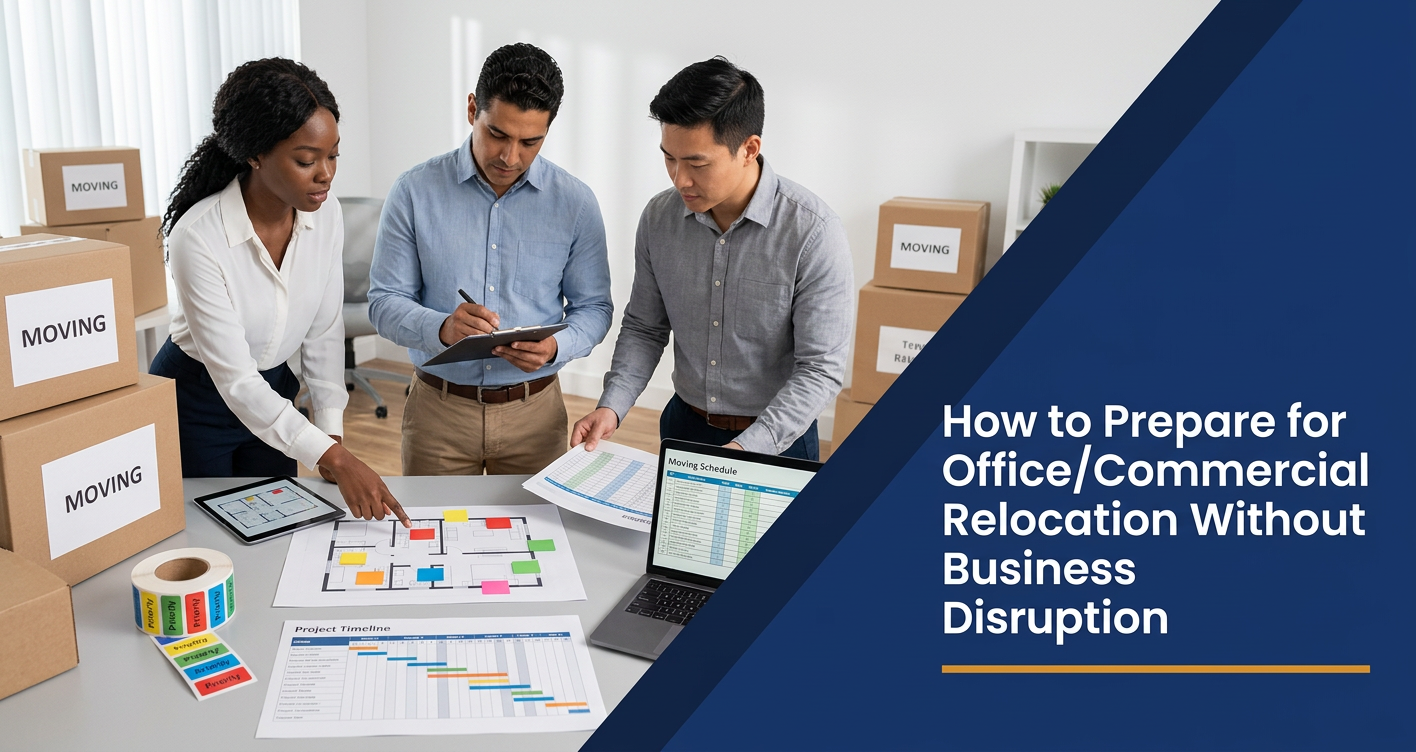
Relocating an office or commercial space ranks among the most stressful events for any business. Yet, with proper planning, it becomes an opportunity for growth, efficiency, and a better work environment. Many companies in Bangalore successfully shift offices every year while keeping operations running smoothly.
At FirstPick Packers and Movers, we have helped hundreds of businesses in Bengaluru and across India complete seamless commercial relocations. This comprehensive guide shares proven strategies to minimize downtime, protect valuable electronics and files, and ensure a productive transition.
Why Office Relocation Needs Careful Planning in 2026
Businesses today operate in a hybrid world with high dependence on IT infrastructure. Downtime can cost thousands per hour in lost productivity, missed client deliverables, and employee frustration.
Current trends in 2026 include:
- Phased and weekend moves to maintain continuity.
- Right-sizing offices for hybrid work models.
- Emphasis on sustainable practices and advanced IT cutover planning.
Early planning (ideally 6–12 months ahead) helps control costs and reduce risks.
Step 1: Create a Detailed Relocation Timeline and Team
Start early and assign responsibilities clearly.
- Form a relocation committee — Include representatives from IT, HR, Admin, and department heads.
- Set clear goals — Minimal downtime, zero data loss, on-time completion.
- Develop a phased timeline — Move non-critical departments first while keeping client-facing or mission-critical teams operational.
Recommended Timeline:
- 6–12 months out: Site selection, budgeting, vendor shortlisting.
- 3–6 months out: Inventory, IT planning, employee communication.
- 1–3 months out: Packing schedule, floor plans, testing.
- Move week: Execution with minimal disruption.
- Post-move: Setup, testing, and feedback.
Step 2: Budgeting and Cost Management
Office shifting costs in Bangalore typically range from ₹12,000–₹50,000+ for small to medium offices, depending on size, distance, and services. Factor in contingencies (15–20% extra).
Key cost factors:
- Volume of goods and specialized packing for electronics.
- Distance (local vs. intercity).
- Additional services like IT setup, unpacking, and storage.
Pro Tip: Get multiple quotes from verified commercial movers and choose experienced providers who offer insurance and after-hours services.
Step 3: Inventory and Decluttering
Conduct a full audit of assets.
- Create a detailed spreadsheet of furniture, electronics, files, and equipment.
- Decide what to move, sell, donate, recycle, or store.
- Declutter to reduce volume and costs.
Special focus on electronics:
- Inventory all devices with serial numbers and photos.
- Test functionality and plan upgrades.
- Use anti-static packing and proper cushioning.
Step 4: Protecting Electronics and IT Infrastructure (Critical for Zero Downtime)
IT forms the backbone of modern offices.
Actionable Checklist:
- Backup all data multiple times (cloud + external drives).
- Coordinate with internet/telecom providers for new office setup well in advance.
- Schedule IT cutover during off-hours or weekends.
- Use professional movers trained in sensitive equipment handling.
- Set up core servers and networks at the new site before full staff arrival.
Label cables clearly and photograph current setups for easy reconnection.
Step 5: Handling Important Files and Documents
- Digitize non-essential paper records.
- Use color-coded, secure boxes for physical files.
- Categorize as “Immediate Access,” “Archive,” or “Storage.”
- Implement a file tracking system during transit.
- Ensure confidential documents travel with authorized personnel or under insurance.
Step 6: Communication and Change Management
Keep employees informed to reduce anxiety.
- Share regular updates via town halls or emails.
- Provide clear instructions on personal items packing.
- Offer flexible work options (remote/hybrid) during move week.
- Plan team-building activities in the new space to boost morale.
Step 7: Choosing the Right Commercial Packers and Movers
Not all movers handle office relocations equally well. Look for:
- Experience in commercial shifting.
- Specialized equipment for heavy furniture and electronics.
- Comprehensive insurance coverage.
- GPS-tracked vehicles and professional packing teams.
- Ability to work after hours or in phases.
FirstPick Packers and Movers offers tailored office relocation services in Bangalore with minimal disruption guarantees, expert handling of IT assets, and full unpacking support.
Step 8: Execution Day Strategies for Minimal Disruption
- Opt for weekend or phased moves.
- Have an on-site supervisor from the moving company and your team.
- Prioritize unpacking essential workstations first.
- Test all systems before employees start work.
Post-Move: Settling In Efficiently
- Conduct a Day 1 audit of all critical systems.
- Gather employee feedback for quick fixes.
- Update all business addresses with clients, banks, and authorities.
- Monitor productivity for the first two weeks and address issues promptly.
Conclusion
A well-planned office relocation not only avoids business disruption but can energize your team and improve overall efficiency. By starting early, focusing on IT and data protection, and partnering with experienced professionals, you can achieve a seamless transition.
Ready to make your office move stress-free?
Contact FirstPick Packers and Movers today for a free quote and consultation. Our expert team specializes in commercial relocations across Bangalore and India, ensuring your business stays productive every step of the way.
Share your office relocation experiences or questions in the comments below. What was your biggest challenge during a past move